How to Choose the Perfect Office Desk for Your Workspace Needs?
Choosing the right office desk is crucial for any workspace. It can significantly affect productivity and comfort. With so many options available, identifying the perfect fit might feel overwhelming.
An ideal office desk should accommodate your specific needs. Consider your work style, space limitations, and aesthetic preferences. Every detail matters, from the desk height to the arrangement of storage. A well-chosen desk can enhance organization and create a pleasing environment.
Reflecting on your daily tasks can guide you in your decision. Do you need extra surface space for projects? Perhaps a standing desk suits you better. No desk is perfect, but finding one that meets most of your requirements can lead to greater satisfaction in your workspace.
Assessing Your Workspace Requirements for an Office Desk
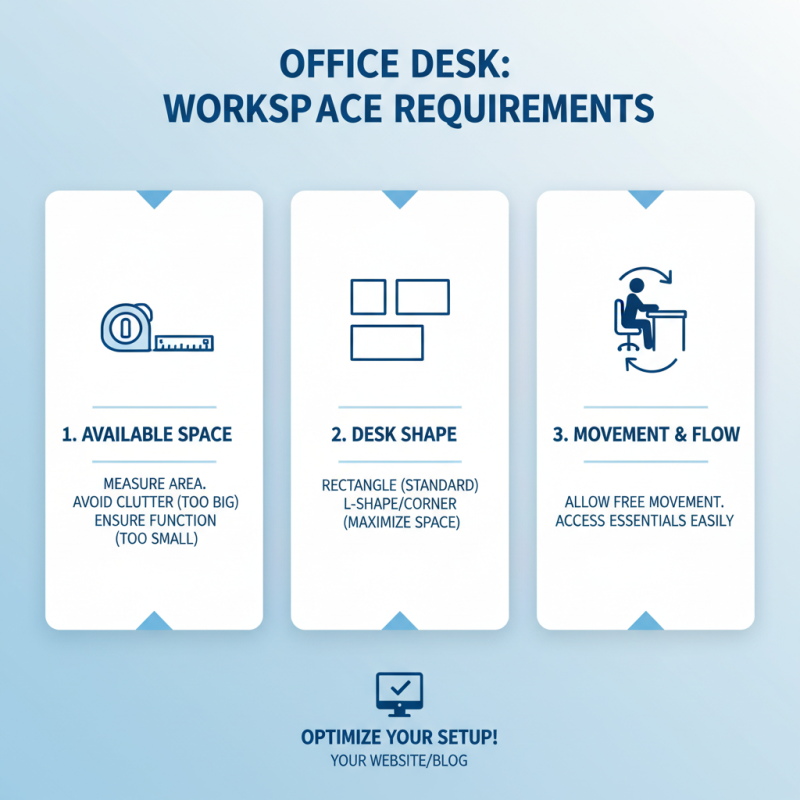
Choosing the right office desk requires careful consideration of your workspace needs. Start by assessing the available space. Measure the area where the desk will go. A desk that is too large can clutter the room. A small desk might not provide the needed workspace. Think about the shape of the desk, too. A corner desk can maximize space but limits movement.
Consider your work style next. Are you a person who prefers a tidy surface? Then you might need a desk with built-in storage. If you often have multiple projects, a larger surface area is essential. Take into account the equipment you use. An ergonomic keyboard and monitor height can enhance comfort. Reflect on how long you'll spend at the desk. Higher-quality options may be worth the investment for daily use.
Also, think about aesthetics. A desk should complement your workspace design. However, remember that beauty varies from person to person. Sometimes, a desk looks great but lacks functionality. Evaluate your options carefully. Find a balance between style and practicality. Each choice you make shapes your daily work experience.
Understanding Different Types of Office Desks and Their Features
Choosing the right office desk is crucial for productivity. Various types of desks cater to different needs. A traditional flat desk offers a simple, spacious surface for paperwork and devices. Its clean lines facilitate organization, but it may lack flexibility. Standing desks allow for movement and adjustment, promoting better posture. However, they can be less stable for larger monitors.
L-shaped desks maximize corner space, providing ample room for multiple tasks. They can be great for collaboration but may feel cramped in smaller areas. Height-adjustable desks are versatile, accommodating both sitting and standing. They can be helpful, yet not all models offer easy transitions.
Assess your workflow and space before deciding. Think about the features you need. Do you prefer storage options? Will you collaborate often? Reflecting on these aspects helps in making a sound choice. Remember, the perfect desk enhances your workspace but is not the only factor in your productivity.
Types of Office Desks and Their Popularity
Key Factors to Consider: Size, Material, and Ergonomics
When choosing the right office desk, size plays a crucial role. A desk that is too small can limit your workspace, making it hard to stay organized. A larger desk provides ample space for documents, equipment, and personal items. Visualize your workspace needs. Would you benefit from additional surface area for multiple monitors? Or do you need storage? Understand your requirements and measure your space accurately.
Material is another important factor. Desks come in various materials, each with its advantages. Wood offers durability and a classic aesthetic. Metal desks can provide a modern look and are often sturdier. Consider your office environment. Do you prefer a warm ambiance or a sleek, contemporary feel? The material can influence not only the desk's longevity but also the overall mood of your workspace.
Ergonomics cannot be overlooked. An uncomfortable desk height could lead to strain and fatigue. Adjustability is key for a productive work environment. Chairs and desks should work together harmoniously. Reflection is essential—how does your current setup affect your productivity? Take time to evaluate and adjust your workspace for optimal comfort. Finding the right desk is a blend of practicality and personal preference, ensuring it fits your unique work style.
Budgeting for Your Office Desk: Cost vs. Quality Considerations
Choosing the right office desk involves careful budgeting. Many people focus too much on aesthetics. They often forget about quality and longevity. A desk isn't just furniture; it’s your workspace foundation. Think about how much time you'll spend at it. A good desk should accommodate your ergonomic needs.
Consider your budget wisely. Higher price tags don’t always guarantee better quality. There are desks that look impressive but might not withstand regular use. Investing in a sturdy desk can save you money in the long run. If you're on a tight budget, research options. Some affordable desks offer excellent durability without breaking the bank.
Taking time to reflect on your requirements can be beneficial. Ask yourself questions about functionality. Will it serve a dual purpose? Is space a constraint? Even small details, like drawer space, matter. Finding the perfect balance between cost and quality is crucial. A desk should not only fit your space but also your work style.
How to Choose the Perfect Office Desk for Your Workspace Needs? - Budgeting for Your Office Desk: Cost vs. Quality Considerations
| Desk Type |
Price Range |
Material |
Durability |
Recommended Use |
| Standing Desk |
$200 - $1,000 |
Wood/Metal |
High |
Home/Office |
| Executive Desk |
$500 - $3,000 |
Solid Wood |
Very High |
Executive Office |
| Compact Desk |
$100 - $500 |
Particle Board |
Medium |
Small Spaces |
| L-Shaped Desk |
$200 - $800 |
Wood/Metal |
High |
Multifunctional |
| Corner Desk |
$150 - $700 |
Wood/Glass |
Medium |
Space-Saving |
Personalizing Your Desk Space: Style and Functionality Preferences
Choosing the right desk can deeply impact your productivity and comfort at work. According to a 2021 report by the Global Furniture Group, employees with personalized workspaces show a 32% increase in productivity. Personalizing your desk involves enhancing both style and functionality, creating an inviting environment that suits your preferences.
Consider the aesthetics of your desk space. A 2022 study from the American Society of Interior Designers indicates that 66% of workers feel more motivated in visually appealing environments. Adding elements like plants or artwork can promote creativity. However, clutter can diminish focus. Finding that balance between personal touches and a tidy workspace can be challenging.
Functionality is equally crucial. Adjustable desks are increasingly popular; they allow for sitting and standing positions, supporting better posture. Research by the Occupational Safety and Health Administration reveals that ergonomic workspaces reduce the risk of musculoskeletal disorders. Reflect on your work habits. Do you need more storage? Consider how organizational tools can streamline your workflow. Balancing style with practicality is key to creating a workspace that truly reflects your needs.