Leave Your Message

10 Office Furniture Buying Tips for Global Buyers?

Buying Office Furniture across borders is not simply a matter of comparing prices. It involves workplace performance, shipping conditions, material quality, employee comfort, and long-term service. A desk may look affordable online, yet its packed dimensions can increase freight costs sharply. A chair may pass a basic inspection, but still cause discomfort after six hours of use.

Industry data shows why this decision deserves more care. Grand View Research estimated the global office furniture market at more than US$50 billion in 2023, with continued growth expected through 2030. Meanwhile, the Gensler Research Institute’s 2024 Global Workplace Survey highlights the growing importance of workplace choice, flexibility, and varied work settings. These findings suggest that global buyers should evaluate furniture as part of a workplace system, not as isolated products.

Reliable purchasing also requires practical verification. Buyers should request test reports, warranty terms, packaging photographs, material specifications, and replacement-part policies. BIFMA standards can help assess durability and safety for commercial furniture, while FSC certification may support responsible wood sourcing. However, certifications do not answer every question. Supplier communication, factory experience, and quality-control records still matter.

Small details often decide the result.

Can the chair fit local body sizes? Will the desk survive daily cable movement? Are replacement components available in three years? These questions seem ordinary, but they expose weak purchasing plans. Market reports provide useful direction, yet they cannot replace factory audits or sample testing. This guide presents ten practical Office Furniture buying tips for global buyers, while acknowledging one uncomfortable truth: the cheapest quotation is rarely the lowest total cost.
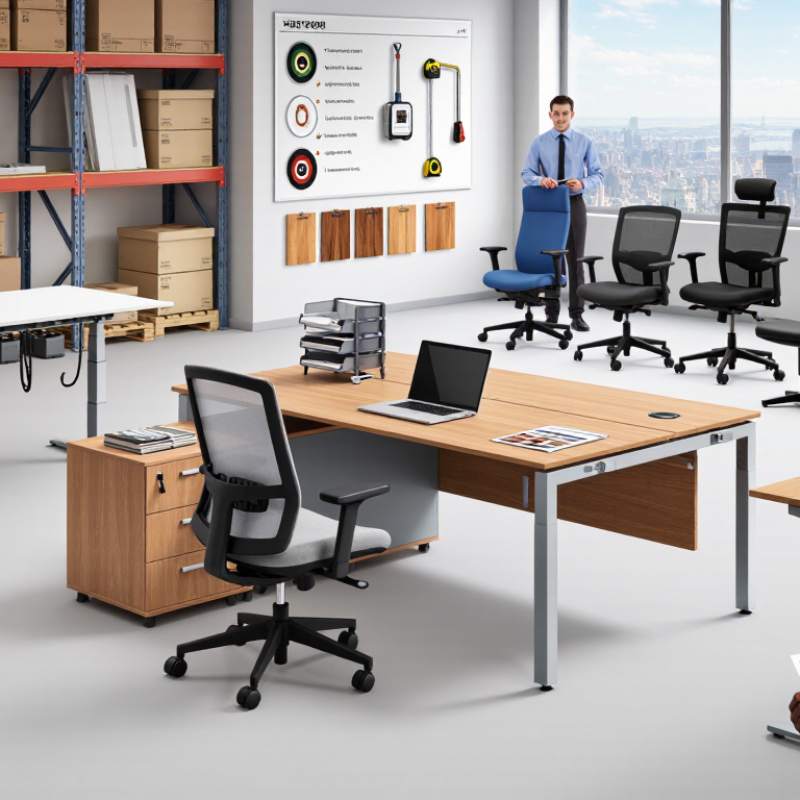
10 Office Furniture Buying Tips for Global Buyers?

Set Needs, Space, and Budget for Hybrid Teams (Gallup: 6 in 10 Prefer Hybrid)

Hybrid work changes what office furniture must accomplish. Gallup’s 2024 State of the Global Workplace reports that six in ten remote-capable employees prefer hybrid work. That preference makes fixed desk rows less practical. Buyers should measure attendance patterns before ordering. Track peak-day occupancy, meeting demand, and quiet-work needs for at least four weeks.

Start with ten practical checks:

define team needs, measure usable space, set a total budget, map power access, choose adjustable desks, provide supportive chairs, add movable screens, plan shared storage, test acoustic control, and confirm delivery capacity.

A smaller office may need nesting tables and mobile seating. A larger one may need clear zones for calls, focused work, and collaboration. Accessibility should guide every layout, not become an afterthought.

The International Facility Management Association’s workplace research consistently links effective space planning with employee experience and operational efficiency. Gallup also finds that engagement depends partly on whether employees have the tools needed to perform well. Ask staff to test sample chairs and desk heights for a full working session. Short demonstrations can hide discomfort. That is where buyers often misjudge value. Allow room for replacement parts, future headcount changes, and local installation constraints. Budgeting only for purchase price is a common mistake. Hybrid teams also need furniture that can be reconfigured without noise, damage, or specialist tools.


Check Ergonomics and Accessibility (ANSI/BIFMA X5.1; ADA: 36-In Routes)

Global office furniture buyers should test ergonomics before comparing prices. A chair may look supportive, yet create pressure behind the knees after two hours. Check seat height, depth, lumbar adjustment, armrest movement, and backrest stability. Let different body types sit and adjust the chair.

A useful reference is ANSI/BIFMA X5.1, which covers performance and durability testing for office seating. Ask suppliers for current test reports, product specifications, and the tested configuration. Do not assume every similar model meets the same requirements. Small changes in materials or mechanisms can affect results. Verify the documents independently.

Accessibility also belongs in the floor plan, not only the product catalogue. Where ADA requirements apply, maintain accessible routes with at least 36 inches of clear width in typical sections. Measure between chair arms, table legs, storage units, and temporary obstacles. A desk might fit on paper but block a wheelchair user’s turning space. Keep controls reachable, edges stable, and surfaces easy to approach. Clear paths matter.

One practical mistake is testing furniture only in an empty showroom. Real offices include bags, cables, visitors, and uneven spacing. Review the layout with users who have different mobility needs. A checklist helps, but it cannot replace observation. Recheck measurements after installation.

Compare Materials and VOC Certifications (EPA: Indoor Pollution Can Be 2–5× Higher)

10 Office Furniture Buying Tips for Global Buyers?

Material selection affects more than appearance and price. The U.S. Environmental Protection Agency reports that indoor pollutant levels can be 2–5 times higher than outdoor levels. In some cases, they may be much higher. For global buyers, compare solid wood, metal, plywood, and medium-density fiberboard carefully. Composite panels can release formaldehyde, especially after installation. Ask for test results, not vague “eco-friendly” claims.

Review emissions data from independent chamber testing. Certifications based on CDPH Standard Method v1.2 or ISO 16000 testing can help verify VOC performance. Check whether the certificate covers the complete product, including adhesives, coatings, fabrics, and edge treatments. A low-emission panel may still perform poorly when combined with strong glue or fresh paint. This detail is often missed.

Request the test date, laboratory name, sample description, and tested VOC limits. EPA guidance also recommends increasing ventilation during installation and early occupancy. That practical step matters in enclosed offices. Still, certification is not a guarantee of zero emissions. Testing conditions may differ from real rooms, and documents can be incomplete. Buyers should compare identical test methods across suppliers. The cheapest quote can become the most expensive choice when odors, complaints, or replacement work follow.

Calculate Landed Cost and Lead Time (Incoterms 2020 Has 11 Trade Rules)

Global office furniture buyers should calculate landed cost before comparing supplier prices. A low unit price can hide expensive delivery conditions.

Build a worksheet for each quotation. Include furniture, packaging, inland transport, export clearance, freight, insurance, import duty, VAT, brokerage, port fees, and final delivery. Add currency movement and possible storage charges. These details matter.

Small costs accumulate fast.

Incoterms 2020 includes 11 trade rules, but the rule alone does not show your final cost. It defines responsibilities, risk transfer, and selected transport obligations. Request the exact named place and the stated version in writing. EXW may leave you handling most export logistics. FOB usually covers loading onto the vessel, while CIF includes freight and insurance to the destination port. DAP may exclude import clearance and taxes. DDP can simplify delivery, but local tax and importer requirements need careful checking.

Lead time needs the same discipline. Separate production days from inspection, booking, port handling, ocean or air transit, customs clearance, and last-mile delivery. Ask for a realistic range, not one attractive date. A shipment may leave the factory on time yet wait five days for a vessel. That delay is easy to miss.

Keep a buffer for peak seasons and document changes. I have seen buyers ignore destination handling fees, then revise their budget after arrival. That mistake is preventable, although forecasts are never perfect. A landed-cost table with assumptions, evidence, and a contingency percentage is more reliable than a simple catalog price.

10 Office Furniture Buying Tips for Global Buyers — Calculate Landed Cost and Lead Time
No. Buying Dimension Recommended Action Key Data to Collect Why It Matters
01 Define the full product specification Confirm dimensions, materials, finishes, packaging, assembly method, load rating, electrical requirements, and applicable safety standards before requesting quotations. Product drawings, bill of materials, carton dimensions, gross weight, net weight, and quantity per container. Prevents quotation gaps, unexpected substitutions, and inaccurate freight calculations.
02 Classify the goods correctly Identify the appropriate HS code for each product category, such as desks, seating, storage units, lighting, or electrical accessories. Confirm the code with a customs professional in the importing country. HS code, country of origin, material composition, customs description, and preferential trade agreement eligibility. Duty rates, import restrictions, documentation, and customs risk depend on correct classification.
03 Compare total landed cost, not unit price Build a landed-cost model that includes product price, packaging, inland transport, export charges, international freight, insurance, destination charges, duty, brokerage, and non-recoverable taxes. Quoted price, currency, freight rate, insurance premium, duty rate, brokerage fee, local delivery, and tax treatment. The lowest factory price may produce the highest delivered cost.
04 Select the Incoterm deliberately Choose the Incoterms® 2020 rule according to your control over freight, customs capability, insurance requirements, and risk tolerance. Always name the place or port precisely. Selected rule, named place, transfer point, freight payer, export/import clearance responsibility, and insurance requirement. Incoterms allocate costs, tasks, and risk; they do not determine ownership or payment terms.
05 Validate packaging and container utilization Request a confirmed packing list and calculate carton volume. Optimize carton size without compromising edge protection, moisture protection, or drop resistance. Carton count, dimensions, cubic meters, stackability, pallet footprint, and container loading plan. Furniture is often volume-limited; better packing can reduce freight cost and damage.
06 Separate production time from transport time Ask for a milestone schedule covering order confirmation, material preparation, production, inspection, booking, dispatch, customs clearance, and final delivery. Ready date, factory cut-off, sailing or flight schedule, transit time, port dwell allowance, and delivery appointment. A quoted “lead time” may exclude production, customs, transshipment, or last-mile delivery.
07 Check compliance and documentation Confirm required product tests, labeling, manuals, declarations, wood-packaging requirements, chemical restrictions, and electrical certifications before production. Commercial invoice, packing list, bill of lading or air waybill, certificate of origin, test reports, and import permits if applicable. Missing or inconsistent documents can cause customs holds, relabeling, storage charges, or rejection.
08 Plan quality control before shipment Use approved samples, measurable acceptance criteria, pre-production approval, in-process checks, and a pre-shipment inspection based on an agreed sampling plan. Inspection checklist, tolerance limits, defect classification, packaging standard, and corrective-action process. Resolving defects before dispatch is usually faster and less expensive than returning bulky furniture.
09 Budget for exchange-rate and surcharge risk State the quotation currency and validity period. Confirm how fuel, peak-season, security, congestion, demurrage, detention, and destination surcharges are handled. Currency, payment schedule, quote expiry, surcharge rules, free-time allowance, and foreign-exchange contingency. Freight and currency changes can materially affect the final landed cost.
10 Use a written total-cost and delivery baseline Approve the purchase only after comparing suppliers on delivered cost, acceptable quality, payment exposure, risk allocation, and realistic arrival date. Target landed cost, approved delivery window, contingency days, payment milestones, and escalation contacts. A documented baseline supports better supplier comparison and faster action when delays occur.
Incoterms® 2020: The 11 Trade Rules for Office Furniture Imports
Rule Transport Mode Seller Generally Arranges or Pays For Risk Transfers When Buyer Should Budget or Confirm
EXW Any mode Making the goods available at the named place. The goods are placed at the buyer’s disposal, normally before loading. Loading, export clearance, inland transport, international freight, insurance, import clearance, duties, taxes, and delivery.
FCA Any mode Export clearance and delivery to the carrier at the named place. The goods are handed to the buyer’s nominated carrier. Main freight, insurance if required, import clearance, duties, taxes, and final delivery.
CPT Any mode Export clearance and carriage to the named destination. The goods are handed to the first carrier, not when they reach the destination. Insurance, import clearance, duties, taxes, destination handling, and final delivery.
CIP Any mode Export clearance, carriage to destination, and higher-level cargo insurance generally required under the rule. The goods are handed to the first carrier. Import clearance, duties, taxes, destination charges, and final delivery.
DAP Any mode Export clearance and transport to the named destination, ready for unloading. The goods are placed at the buyer’s disposal at destination before unloading. Unloading, import clearance, duties, taxes, and any post-delivery transport.
DPU Any mode Export clearance, transport, and unloading at the named destination. The goods are unloaded and placed at the buyer’s disposal at destination. Import clearance, duties, taxes, and transport after the named destination.
DDP Any mode Transport, export clearance, import clearance, duties, and taxes to the named destination. The goods are placed at the buyer’s disposal at destination, ready for unloading. Unloading and any local requirements the seller cannot legally perform in the destination country.
FAS Sea or inland waterway Export clearance and delivery alongside the vessel at the named port. The goods are placed alongside the vessel. Loading on board, ocean freight, insurance, import clearance, duties, taxes, and delivery.
FOB Sea or inland waterway Export clearance and loading the goods on board the vessel at the named port. The goods are on board the vessel. Ocean freight, insurance, import clearance, duties, taxes, destination charges, and delivery.
CFR Sea or inland waterway Export clearance and ocean freight to the named destination port. The goods are on board the vessel at the shipment port. Insurance, import clearance, duties, taxes, destination charges, and inland delivery.
CIF Sea or inland waterway Export clearance, ocean freight, and cargo insurance to the named destination port. The goods are on board the vessel at the shipment port. Import clearance, duties, taxes, destination charges, and inland delivery.
Illustrative Landed-Cost Calculation for One Office Furniture Shipment
Cost Component Example Amount Calculation or Comment
Product invoice value $12,000 Quoted value for the furniture covered by the commercial invoice.
Origin packing and inland transport $300 Factory-to-port transport and export-side handling not included in the product price.
Export documentation and handling $75 Illustrative origin documentation and terminal-related charges.
International ocean freight $1,450 Illustrative port-to-port freight for a consolidated or containerized shipment.
Cargo insurance $60 Actual premium depends on coverage, route, cargo value, and policy terms.
Destination handling and customs brokerage $420 May include terminal handling, documentation, customs entry, and broker service.
Import duty $600 Illustrative 5% duty applied to a customs value of $12,000. The actual basis and rate vary by jurisdiction and HS code.
Estimated landed cost before recoverable tax $14,905 $12,000 + $300 + $75 + $1,450 + $60 + $420 + $600
Estimated landed cost per unit $149.05 Example assumes 100 equivalent units; allocate shared costs by weight, volume, value, or another consistent method when products differ.
Illustrative Lead-Time Planning Baseline
Milestone Planning Range Important Variables
Specification approval and purchase-order confirmation 2–5 business days Drawing approval, payment confirmation, technical questions, and packaging approval.
Production and packing 25–45 calendar days Product complexity, order quantity, material availability, customization, and factory capacity.
Origin inspection and export preparation 2–5 business days Inspection findings, document accuracy, booking cut-off, and export requirements.
Ocean transit 20–45 calendar days Origin and destination ports, direct or transshipment routing, sailing frequency, and seasonal congestion.
Import clearance and destination delivery 5–12 business days Customs inspection, document consistency, duty payment, terminal release, appointment availability, and local transport.
Total planning window Approximately 55–95 calendar days This is a planning example rather than a guaranteed delivery promise. Add contingency time for peak seasons, holidays, weather, inspections, and port disruption.
Practical reminder: Incoterms® 2020 allocate delivery obligations, costs, and risk between seller and buyer. They do not set the purchase price, payment terms, ownership transfer, customs valuation, or actual transit time. Always specify the exact named place or port and verify local duty, tax, import, and product-compliance requirements before placing an order.

Audit Suppliers, Warranty, and Circularity (BIFMA e3; ISO 14001)

Global office furniture buyers need more than attractive catalogs and competitive quotes. Audit the supplier’s factory before approving a large order. Review production records, worker training, material controls, and corrective-action reports. A video tour helps, but an independent visit reveals more.

Ask for current certificates and verify their scope, location, and expiration date. BIFMA e3 can support claims about sustainable furniture, but it does not replace product testing or responsible procurement. ISO 14001 shows an environmental management system is operating. It does not prove that every product has a low environmental impact. That distinction matters.

Warranty language deserves the same scrutiny. Check coverage periods, replacement procedures, labor costs, and exclusions for international shipments. Request written service contacts in each major market. A cheap chair can become expensive when spare parts take twelve weeks. Test a small batch first. Real users may expose loose armrests, unstable casters, or difficult assembly instructions.

Circularity should be measured, not merely promised. Ask whether components can be separated with ordinary tools. Confirm recycled content, repair options, packaging materials, and take-back responsibilities. Request bills of materials or credible supporting records. Some suppliers describe furniture as recyclable, yet provide no local recovery route. That is a warning.

I have seen buyers overvalue certificates and undervalue after-sales evidence. Both matter. Recheck supplier claims annually, because factories, materials, and subcontractors can change. Keep the audit trail. Mistakes still happen, especially across languages and time zones. Clear specifications and dated photographs reduce avoidable disputes.