China Top Standing Desks for Increased Productivity and Comfort?
In the fast-paced world of productivity, standing desks have emerged as a popular solution. They offer various benefits that enhance comfort and efficiency. Many businesses in China are adopting these workstations to improve employee well-being. Standing desks can help reduce the risks associated with prolonged sitting.
With a surge in remote work, ergonomic furniture is more vital than ever. Workers are reevaluating their home office setups. Poor posture and discomfort can lead to productivity losses. A standing desk may seem like a simple change, but it can yield significant improvements. However, it's essential to find the right desk that suits individual needs and preferences.
Not all standing desks are created equal. Some may lack stability or ease of adjustments. It's crucial to consider quality and design when choosing one. Investing in a standing desk is a step towards a healthier work environment. Yet, it's important to reflect on one's own habits and make deliberate choices. Embracing a standing desk could reshape your workday for the better.
Popular Features of Standing Desks for Increased Productivity
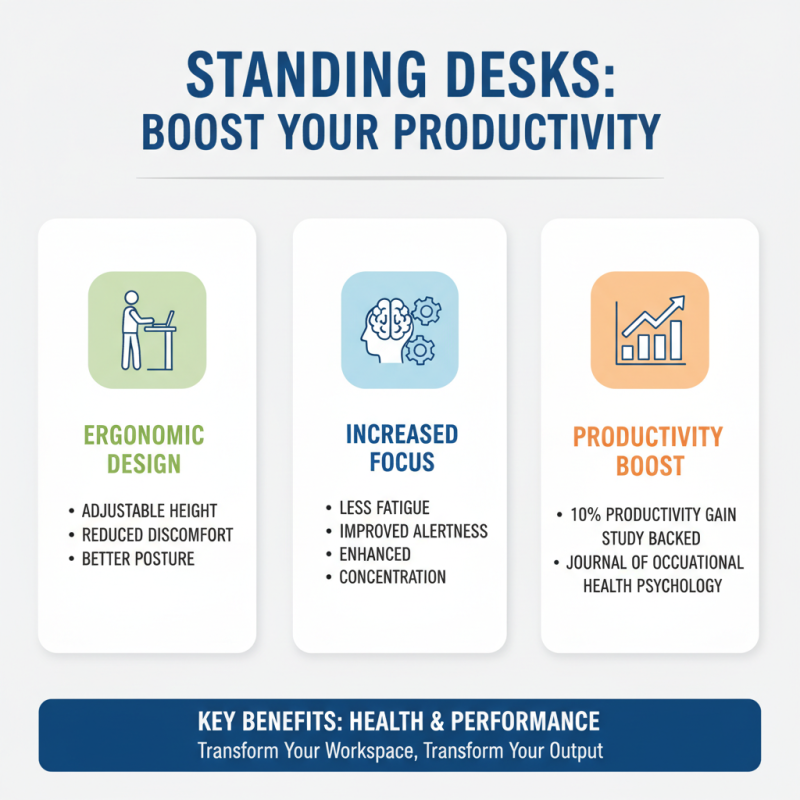
Standing desks have gained popularity in the workplace due to their potential benefits on productivity and health. According to a study published in the Journal of Occupational Health Psychology, employees using standing desks reported a 10% increase in productivity. This is attributed to improved focus resulting from reduced discomfort while working.
Many standing desks offer unique features. Height adjustment is essential, allowing users to switch between sitting and standing effortlessly. Additionally, integrated cable management systems help maintain a tidy workspace. Research from the American Journal of Preventive Medicine indicates that using a standing desk can reduce sedentary time by 1.5 hours a day, leading to better overall health.
Incorporating movement into your day can enhance the benefits of standing desks. Set reminders to switch positions regularly. Aim to stand for at least 15-30 minutes every hour. Remember, it's essential to pay attention to your posture. Keep your screen at eye level, and maintain a neutral wrist position while typing. These small adjustments can greatly improve comfort and productivity while using a standing desk.
Health Benefits of Using Standing Desks in the Workplace
The modern workplace is designed to enhance productivity, yet many employees struggle with discomfort. Standing desks are gaining popularity for their potential health benefits. Studies show that these desks can reduce back pain. They promote better posture, which is crucial during long work hours.
Using a standing desk can also boost energy levels. Many users report feeling more alert and focused. Alternating between sitting and standing can combat fatigue. This can lead to increased productivity throughout the day. However, it’s important to find a balance. Prolonged standing can also cause discomfort.
It’s essential to introduce standing desks gradually. This approach helps the body adapt without strain. Incorporating movement breaks is also vital. Small actions like stretching or walking can enhance overall comfort. Reflecting on how your body feels while using a standing desk can lead to better choices in your work routine.
China Top Standing Desks for Increased Productivity and Comfort
| Desk Model |
Height Range (cm) |
Material |
Weight Capacity (kg) |
Health Benefits |
| Model A |
60 - 120 |
Wood and Metal |
80 |
Reduces back pain, enhances posture |
| Model B |
70 - 130 |
Bamboo |
100 |
Increases energy level, improves focus |
| Model C |
65 - 125 |
Metal and Glass |
90 |
Boosts productivity, decreases fatigue |
| Model D |
80 - 140 |
Solid Wood |
120 |
Promotes movement, enhances mood |
Comparative Analysis of Top Standing Desk Brands in China
In recent years, standing desks have gained popularity in China. A report from the Chinese Office Furniture Association reveals that over 30% of office workers now use them. This shift reflects a growing recognition of the importance of ergonomics in the workplace. Many users report feeling more energized and productive when using these desks.
A comparative analysis of various brands shows significant differences in features. For instance, adjustable height settings are commonly found in most models. Yet, a study by Ergonomics International suggests that not all desks meet industry standards for stability and durability. This can lead to frustration when a desk wobbles during use. Some users have also highlighted issues with the ease of adjusting the height.
Furthermore, the aesthetics of standing desks cannot be overlooked. Many prefer designs that blend with their office decor. A survey indicated that 45% of respondents consider style a crucial factor when choosing a desk. However, the balance between style and functionality is not always achieved. Some aesthetically pleasing options lack ergonomic features that are essential for comfort and health. This presents an ongoing challenge for consumers looking for the perfect standing desk.
Tips for Choosing the Right Standing Desk for Your Needs
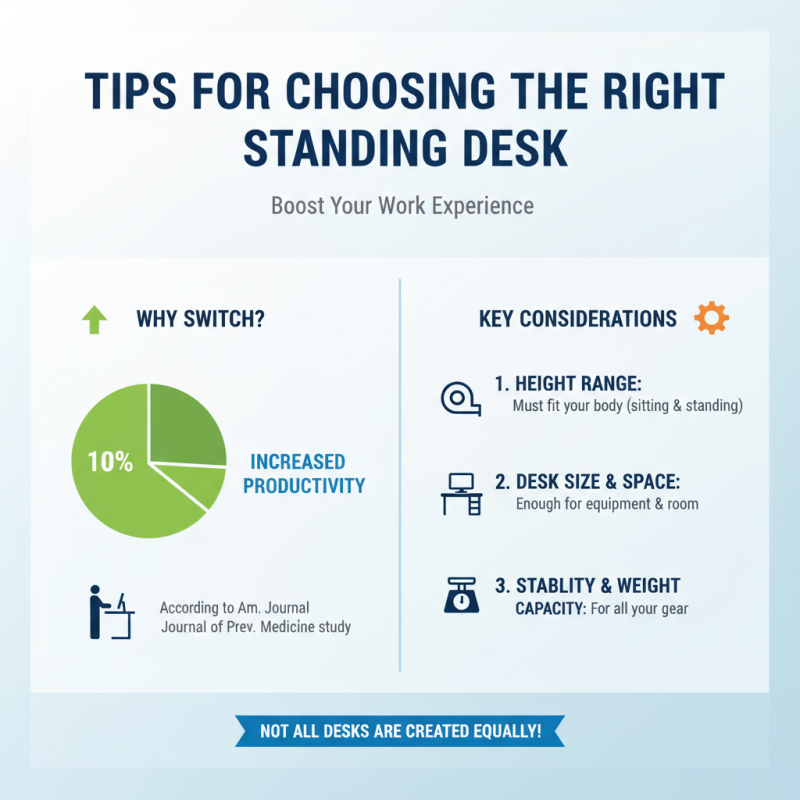
Choosing the right standing desk can greatly enhance your work experience. A study from the American Journal of Preventive Medicine highlights that standing desks can improve productivity by 10%. However, not all standing desks are created equal.
Consider your workspace. A desk with adjustable height can accommodate different tasks. The ability to switch between sitting and standing promotes better posture and keeps energy levels high. Ergonomic features are essential as well. A desk without proper wrist support can lead to discomfort.
Look for materials that are durable yet aesthetically pleasing. Many users prefer desks made from sustainable sources. Reports indicate that users are more satisfied with desks that blend style and function. Remember, a desk should reflect your personal style while meeting your operational needs.
Ultimately, take the time to try different options. Everyone's needs are unique, and what works for one person may not work for another. Factors such as desk size, monitor height, and keyboard position matter. Investing time in making the right choice can lead to increased productivity and comfort.
User Experiences: Standing Desks Impact on Comfort and Focus
In recent years, many users have reported significant changes in their comfort and focus when using standing desks. An interesting aspect is how simple adjustments can make a big difference. A few inches in desk height can improve posture and alleviate back pain. Users often mention feeling less fatigued after long hours of work. Ergonomic designs seem to support better health choices, allowing for movement and stretching.
However, not all experiences are positive. Some individuals struggle with the transition. They find standing for prolonged periods tiring. It takes time to adapt to a new routine. Frequent breaks are essential to mitigate discomfort. Users are encouraged to listen to their bodies and find a balance between sitting and standing.
Personal anecdotes highlight varying opinions on focus levels. While some swear by standing desks for better concentration, others find themselves distracted by their surroundings. Getting accustomed to a standing desk requires patience and persistence. It's vital to recognize that what works for one person might not work for another. Understanding this variability is key to enhancing productivity and comfort in the workspace.